
Hero graphic

Building interfaces to connect complex biological and chemical systems with computers

Research

We strive to deliver solutions to some of the most difficult problems faced by our society.

Areas of research

Human and animal health

Food safety

Plants

Fundamental

News

Latest publication

Synthetic Whole-Cell Bioelectronic Chemical Sensing with In Situ Genetic Computing

2025 · Chem & Bio Engineering

R. W. Bradley, E. Nunez-Bajo, F. Güder, M. Buck, B. Wang

Keep up-to-date with our work by following us on Twitter and subscribing to our YouTube channel!

People

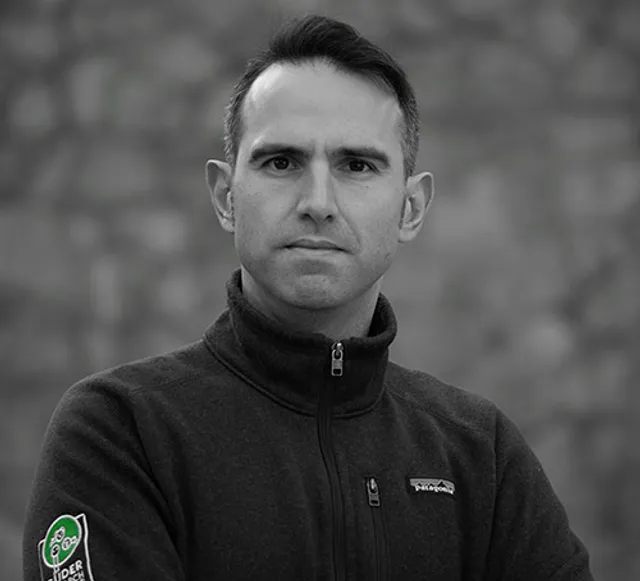
Professor Firat Güder

Professor Firat Güder

Chief Engineer, Güder Research Group
Chair in Intelligent Interfaces
Department of Bioengineering,
Imperial College London


Professor Fırat Güder leads the Güder Research Group at Imperial College London, focusing on the development of intelligent interfaces at the intersection of materials science, electronics, computing, biology, and chemistry. His research aims to create impactful technologies addressing global challenges in health, food systems, and the environment.

Prior to joining Imperial, Professor Güder was a research fellow in the group of Prof. George M. Whitesides at Harvard University. He holds a PhD in Microsystems Engineering (summa cum laude) from the University of Freiburg, Germany, and a BSc in Computer Engineering (First Division) from the University of New Brunswick, Canada.

Awards & Recognition
  • Fellow of the Royal Society of Chemistry
  • Ten Outstanding Young Persons of the World (JCI)
  • President’s Award for Excellence in Innovation and Entrepreneurship
  • ACS Sensors “Rising Star in Sensing”
  • President’s Medal for Excellence in Research
  • Tom West Analytical Fellowship
  • German Research Foundation International Fellowship
  • KU Leuven International Scholarship
  • Furtwangen University MTM Scholarship
  • UNB Class of 1939 Scholarship
  • N. Myles Brown Scholarship
  • Governor Thomas Carleton Scholarship
  • UNB Alumni Achievement Award

Professor Güder is an inventor on multiple licensed patents and has co-founded several startups, including Unhindr Ltd, Spyras Ltd (acquired), BlakBear Ltd, and AniML Ltd. His research is supported by organizations such as the Wellcome Trust, EPSRC, BBSRC, GE Healthcare, The Royal Society, Innovate UK, US Army, European Institute of Innovation & Technology, Gates Foundation, and others.
Research Staff

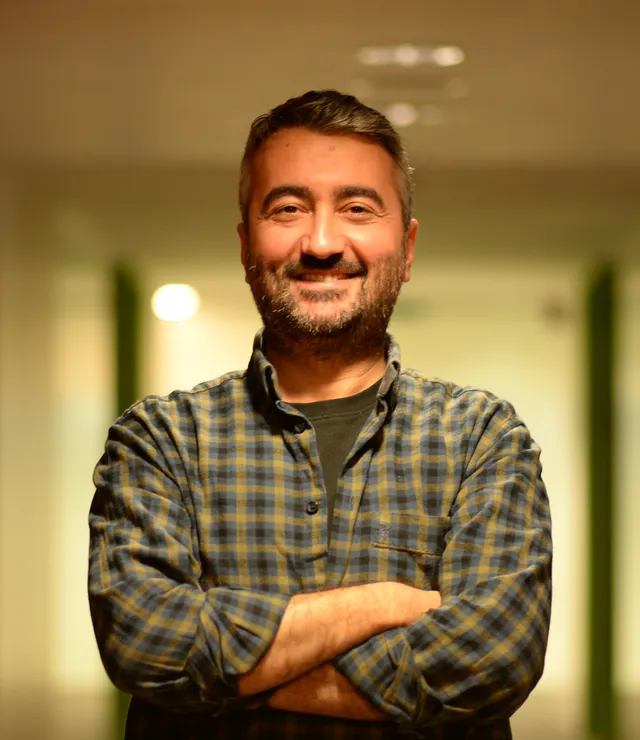
Dr Abdulkadir Gumuscu

Abdulkadir obtained his B.Sc. in Electrical-Electronics Engineering from Inonu University, followed by his M.Sc. and Ph.D. in Electrical-Electronics Engineering from Gaziantep University and Harran University. Since 2017, he has been a faculty member at Harran University. His research focuses on artificial intelligence for bioengineering applications. These researches are used to develop methods for sperm detection, Parkinson’s Disease detection, plant leaves classification and microarray data classification. He has held various positions in different projects, particularly in the field of information technologies. He has taught microprocessors, Artificial Intelligence and hardware-based course at the Harran University Department of Electrical-Electronics Engineering. Abdulkadir works on machine learning and deep learning on biomedical and plant data in the Guder Research Group.

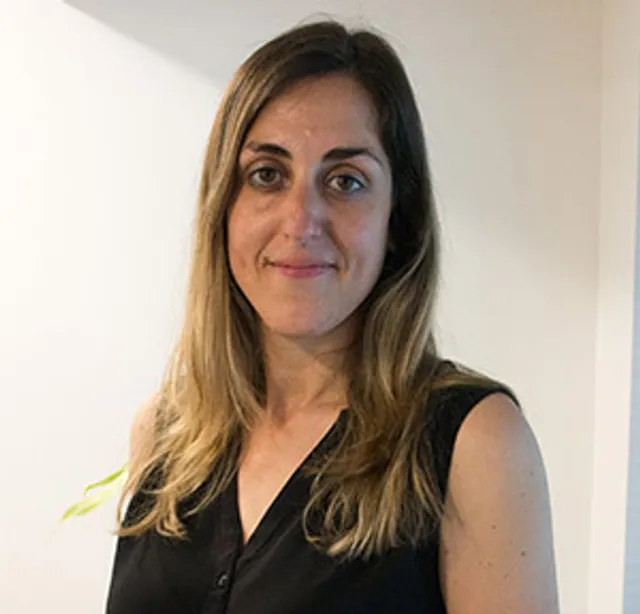
Dr Laura González-Macia

Laura obtained a BSc in Chemistry and a Master in Electrochemistry from the University of Seville and a PhD in Chemical Sciences from Dublin City University. During her doctoral studies she worked on the development of printed electrochemical sensors and biosensors using novel electroactive materials. She then spent several years as a Research Associate/Fellow at the University of the West of England and the Ecole Nationale Superieure de Chimie de Paris, where she worked on the integration of printed biosensors on diagnostics platforms and the development of solid-phase micro-extraction devices. She then joined Osasen Sensores SL (now Biolan Health) as Scientific Director and Marie Skłodowska-Curie Individual Fellow (MSCA IF), where she worked on the development of Point-of-Care devices for the healthcare market. As part of Guder Research Group, Laura is working on (electrochemical) paper-based sensors for the monitoring of food spoilage and plant viruses. She has been recently awarded her second MSCA IF to work on Lateral Flow Assays coupled with gas sensors for the determination of pathogens in food. (NELLAFLOW project has received funding from the European Union’s Horizon 2020 research and innovation programme under the Marie Sklodowska-Curie grant agreement No 101025390).

Dr Yasin Cotur
Dr Yasin Cotur

Dr. Yasin Cotur completed his PhD in Bioengineering at Imperial College London and specializes in creating wearable biosensors for health monitoring. His work encompasses the development of cutting-edge biosensors for real-time physiological tracking and the design of sophisticated soft wearable systems with wide-ranging health applications. As a co-founder and leading figure at AniML, Dr. Cotur is instrumental in driving forward the development of AI-enhanced wearable technologies aimed at improving animal health. His extensive publication record spans sensor technology, physiological monitoring, and the integration of machine learning in biomedicine, showcasing his commitment to enhancing both the functionality and accessibility of bioengineering solutions in day-to-day healthcare.

Dr José Flauzino
Dr José Flauzino

José obtained a BSc in Biotechnology, Master and PhD in Biochemistry from the Federal University of Uberlândia, with sandwich periods at the Technical University of Dresden and the Catalan Institute of Nanoscience and Nanotechnology. He also worked as a Scientific Consultant for Biosens Healthcare and as a Research Associate at the Czech Advanced Technology and Research Institute. His research is focused on the development of nanomaterial-based electrochemical biosensors for detection of relevant biomarkers, viruses, food pathogens and food adulteration. As part of Güder Research Group, José is working on a project founded by the Bill & Melinda Gates Foundation to develop NFC-powered electrochemical lateral flow assays for detection of plant viruses to ensure food safety.

Dr Selin Olenik
Dr Selin Olenik

Selin earned a 1st class MEng degree in Biomedical Engineering with a Year in Industry from Imperial College London in 2020, working with the Güder Research Group for her final year project to design and develop a wearable indoor navigation system for military search dogs. Selin spent a year with Philips Respironics in Chichester, U.K. where she primarily worked on developing automated validation software and equipment for nebulizer devices. During the summer of 2017, she also worked with ETH Zürich as part of the Amgen Scholars Program where she developed a neural network to identify semantic features in human mobility patterns. For her PhD, Selin worked with the Güder Research Group to design an injectable NFC-based implantable sensor for patient monitoring.

PhD Candidates

Alanood Al-Yazeed
Alanood Al-Yazeed

Alanood holds a Bachelor’s degree in Biomedical Sciences from the University of Westminster, where she gained expertise in areas like Medical Microbiology, Diagnostic Biochemistry, Haematology, and Immunohaematology. She actively participated in genome editing projects and led a team in engineering E.coli bacteria to break down plastic waste and produce electricity during iGEM 2019. Her thesis project involved using the CRISPR Cas9 tool to modify Osteosarcoma cells to study the significance of the WRN gene. During her undergraduate years, Alanood also contributed to nutraceutical studies, investigating the connection between curcumin and iron levels with the Muhammad Gulrez Research Group. Following her Bachelor’s, she pursued a Master’s in Biomedical Engineering at Imperial College London, where she worked on fabricating a Liquid Metal-Based reconfigurable actuator with the Guder Research Group. Currently, she is undertaking a Ph.D. with the same group, focusing on developing a wireless DNA Injectable Sensor for diagnostic purposes. Alanood’s academic journey demonstrates her dedication to advancing biomedical engineering and contributing to pioneering research in healthcare and diagnostics.

Alex Collins
Alex Collins

Alex gained a 1st class MEng in Biomedical Engineering at Imperial College London where he undertook his master’s project in the Güder research group, developing a wearable sensor for detection of alcohol intoxication. Alex has received an MRes in Molecular Plant and Microbial Sciences since joining the BBSRC Doctoral Training Programme at Imperial and is currently working on the development of a real-time biochemical plant machine interface for his PhD.

Hong Seok (Andrew) Lee

Hong Seok studied MEng Biomedical Engineering at Imperial College where he worked on the fabrication of an organic conductive thread for e-Textile applications for his master’s project in the Guder Research Group. He continued working on his project after his graduation and additionally worked as a Research Assistant at BlakBear where he mainly worked on paper-based sensor development and characterization. Hong Seok is currently part of the London Interdisciplinary Social Science DTP, working to solve the food waste crisis through engineering and by taking a socioeconomical approach. His PhD project is on the development of a NFC-based freshness sensor and to assess its impact on consumer behaviour to reduce food waste.

Mehdi Menteş
Mehdi Menteş

Mehdi holds both BSc and MSc degrees in Biomedical Engineering from Baskent University. Following his undergraduate studies, he gained initial industrial experience at a startup, where he contributed to the development of optical readers for microchannels. After subsequently serving as a Research Assistant at Yeditepe University for three years, Mehdi is currently pursuing his PhD at Imperial College London. His research interests focus on wearable technology, point-of-care diagnostics, and medically purposed optical systems. Leveraging his diverse background, he has joined the Guder Research Group to conduct multidisciplinary research, where he is currently developing smart implants designed to detect infections.

Ziyao Dong
Ziyao Dong

Ziyao Dong is a PhD student and MEng holder in Biomedical Engineering, specialising in the development of advanced sensing technologies for precision livestock farming. His research integrates implantable biosensing, embedded systems, and data-driven monitoring to enable continuous assessment of animal health, behaviour, and physiology. By combining biomedical engineering with agricultural applications, he aims to create practical tools that support early disease detection, improve welfare, and enhance the sustainability of livestock production.

Ziyao’s technical expertise spans ultra-small PCB design, circuit simulation, material science, and low-power embedded systems engineering. He has extensive experience developing compact, robust electronic platforms suitable for long-term implantation, as well as implementing firmware using Zephyr RTOS and C to achieve efficient, reliable operation under strict power constraints. His multidisciplinary background allows him to design end-to-end hardware–software solutions that bridge the gap between cutting-edge biomedical innovation and real-world agricultural needs.

Through his doctoral research, Ziyao aims to contribute to the next generation of intelligent livestock monitoring systems by developing scalable, cost-effective technologies that can be deployed across diverse farm environments. His work advances the broader goal of integrating modern engineering approaches into sustainable and data-informed livestock management.

Alumni

  • Dr Hasan Kurt (Postdoc)

  • Dr Abdulkadir Sanli (Postdoc)

  • Dr Muhammad Adeel (Postdoc)

  • Dr Phil Coatsworth (PhD)

  • Dr Jack Herrington (PhD)

  • Dr Fahad Alshabouna (PhD)

  • Dr Ugur Tanriverdi (PhD)

  • Dr Giandrin Barandun (PhD / Postdoc)

  • Dr Max Grell (PhD)

  • Dr Michael Kasimatis (PhD)

  • Dr Estefania Nunez-Bajo (Postdoc)

  • Dr Sina Naficy (Postdoc)

  • Dr Matti Kaisti (Postdoc)

  • Dr Can Dincer (Postdoc)

Sponsors

BBSRC
EPSRC
Innovate UK
eit Health
Gates Foundation
MedTech SuperConnector
U.S.Army
cytiva
The Royal Society
Institute for Security Science and Technology
Analytical Chemistry Trust Fund
Marie Sklodowska-Curie Grant [1]
AWE
  1. NELLAFLOW project has received funding from the European Union’s Horizon 2020 research and innovation programme under the Marie Sklodowska-Curie grant agreement No 101025390

Contact Info

Güder Research Group
Department of Bioengineering
Imperial College London
Royal School of Mines
SW7 2AZ, London
United Kingdom

+44 2075 949 865

guder@ic.ac.uk

Want to join?

Undergraduate students

If you are interested in joining the lab, please contact Fırat for more information.

Graduate students

We are always looking for driven PhD students who are interested in working an interdisciplinary environment.

There are a number of ways to get a studentship to do a PhD in the Güder Research Group. Imperial College has several scholarship schemes that are geared toward both Home/EU and Overseas students. In addition, the Department of Bioengineering offers scholarships to highly qualified PhD candidates, however, these are mostly for Home students. If we are lucky, we may be able to secure funding through other means, such as third party organizations (e.g., charities) or industry collaborations.

If you would like to apply for a scholarship from your home country, please contact Fırat.

Postdocs

We currently do not have any funded positions available, however, if you’re interested in applying for a fellowship and you are looking for a host, please do not hesitate to contact Fırat.

Visiting Researchers

The group always welcomes visiting researchers. In case of any questions, shoot an email to Fırat.